
Types
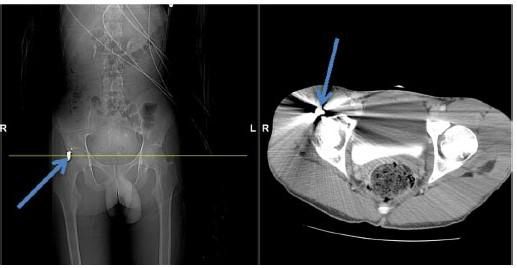
Attention to gunshot wounds of the nervous system, and in particular to peripheral nerve injuries, has increased significantly in recent years due to the significant increase in the number of victims in local military conflicts.
According to the research conducted:
- Nerve damage is isolated in 70% of cases,
- and injuries of a combined nature occur in the other 30%,
- Nerve damage to the upper extremities occurs in 60%,
- and the lower 40%;
Simultaneous injury to the nerve trunks of both the upper and lower extremities occurs in up to 1% of cases.
More frequent damage to the nerve trunks of the upper extremities is due to the presence of a fairly large number of nerves in them and their relatively small “protection” by soft tissue coverings. About 60% of nerve injuries are bullet injuries, about 40% are shrapnel injuries.
The most severe injuries, in which both nerves and blood vessels suffer simultaneously.
Vidi
Gunshot wounds to nerves can be with complete disruption of anatomical integrity and with partial anatomical rupture of the nerve trunk.
Injuries can also be:
- tangential,
- blind
- and through.
In addition, nerve injuries can damage:
- soft fabrics,
- vessels
- and bones.
Infection in a gunshot wound is an aggravating factor in nerve injuries.
In addition to bullets and fragments, foreign objects (hair, pieces of clothing, etc.) can enter the wound, which are usually contaminated with pathogens and can cause infectious complications.
Symptoms
There are quite a few symptoms of nerve damage:
- this is persistent intense pain,
- sensitivity disorders (numbness),
- movement disorders that can lead to paralysis,
- inability to provide sufficient tissue nutrition, which usually leads to irreversible anatomical changes in the form of skin atrophy, increased keratinization, peeling, thinning, vulnerability and fragility of tissues within a month after the injury.
In addition, during this period, the damaged nerve may already be compressed by surrounding scars and other pathological formations. Traumatic nerve injuries and their consequences significantly impair the quality of life of patients.
Treatment
As a rule, attempts at conservative treatment of nerve injuries with complete disruption of their anatomical integrity and/or denervation of nerve trunks rarely result in restoration of nerve functions. The situation only temporarily improves under the influence of specific medications.
This is understandable: both with such injuries and with further restriction of the nerve in scars, it is possible to fundamentally influence the situation without surgical intervention, because in this case it is necessary to restore the integrity of the nerve in a timely manner by carefully and carefully suturing it and or freeing the nerve from its compromising scars.
Surgical treatment is most effective in the first 6-12 months after the injury in most cases. In our department, thanks to the availability of modern diagnostic methods (ultrasound, magnetic resonance imaging), it is possible to clearly determine the level and type of nerve damage.
Types of surgical interventions
Neurolysis
Under an operating microscope, the nerve is freed from scars and adhesions through a small incision, including the removal of the so-called amputation neuroma of the terminal thickening of the damaged nerve. Neurorhaphy is performed when the nerve is torn or cut, and the nerve is sutured with a microsurgical suture.
Nerve suture can be primary (in the early period of injury) and delayed (several weeks or even months after injury). installation of electrodes for direct stimulation of the nerve trunk. Such intervention can be either independent or combined with the above.
Neurostimulation
allows to significantly improve the results of restoring impaired functions and acquire stable pain syndromes. In the postoperative period, restorative pharmacological treatment and physiotherapy are performed, with electrical nerve stimulation, massage, and therapeutic exercise.
Surgical treatment of gunshot nerve injuries is quite possible to achieve good results. As a rule, initial signs of nerve function recovery after suturing are observed after three to four months.
First, pain and temperature sensitivity are restored, then motor function, then trophism (tissue nutrition) is normalized.
Doctor Dmytruk V.S.