
Pituitary adenoma – what is it?
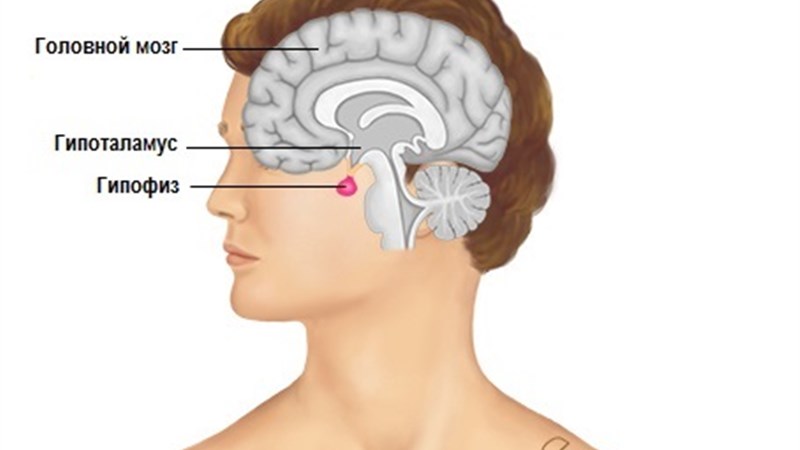
The pituitary gland is an endocrine gland located in the sella turcica fossa of the sphenoid bone; it is separated from the cranial cavity by a process of the dura mater, which forms the diaphragm of the sella.
Pituitary adenoma is a benign brain tumor that arises from cells of the adenohypophysis (anterior lobe of the pituitary gland). It occurs in 12% of patients with intracranial tumors, ranking 3rd among them in frequency, and is more often diagnosed in women, especially in young and old age.
Factors
Factors that increase the chances of developing a pituitary tumor include:
- family or personal history of multiple endocrine neoplasia – a hereditary disease that increases the risk of developing adenoma of the hypothalamus, parathyroid and pancreas;
- other disorders that run in the family, such as acromegaly (gigantism).
Microadenomas and macroadenomas
Pituitary adenomas are divided according to size:
- microadenomas (up to 1 cm in diameter)
- and macroadenomas (over 1 cm in diameter), these tumors can be hormonally active or hormonally inactive.
Hormonally active
Hormonally active tumors, depending on the hormones secreted, are divided into:
- somatotropin,
- prolactinoma,
- corticotropin,
- thyrotropin
- and gonadotropinoma.
Symptoms
Clinical manifestations of hormonally active pituitary adenomas consist of:
- endocrine,
- visual impairment
- and the appearance of general cerebral symptoms due to a gradual increase in intracranial pressure.
Types and manifestations
Prolactinomas in women
- the end of milk from the breast, not related to feeding the child,
- as well as sexual desire disorders,
- menstrual cycle and infertility.
Sometimes observed:
- moderate obesity,
- mild hypertrichosis (excessive hair growth),
- acne (acne rash),
- seborrhea of the scalp (increased sebum secretion and formation of dandruff flakes).
Prolactinoma in men
- sexual dysfunction,
- impotence,
- infertility,
- gynecomastia (enlargement of the mammary glands).
Somatotropinomas
Manifested as gigantism syndrome in children or acromegaly in adults. Acromegaly is accompanied by:
- enlargement of the hands,
- stop,
- skulls,
- especially its front part,
- as well as other organs, which usually occurs after the body’s growth is complete, develops gradually.
It is caused by the production of excessive amounts of somatotropic hormone (growth hormone).
Corticotropinomas
Manifested by Cushing’s syndrome. It includes characteristic obesity, where fat is deposited in the area of:
- chest,
- neck,
- belly
- and the face – it becomes “moon-shaped.”
A feature of this disorder is also considered to be:
- increased appetite,
- increased blood glucose levels,
- The appearance changes – the limbs become thinner, which is caused by a decrease in muscle mass, the person acquires a “spider figure”.
On the skin, in the area of the abdomen, shoulder girdle, hips and buttocks, characteristic purple-blue stretch marks (striae) appear, the skin thins and stretches. The appearance of acne and wounds in the area of the abdominal girdle and the collarbone is noted, where the pigment melanin is deposited, the amount of which increases in direct proportion to the amount of adrenocorticotropic hormone produced by this pituitary tumor. Places of skin friction gradually turn darker, characteristic skin pigmentation with “marbling” of the skin is noted.
Women develop excessive hair growth on their chest and chin, menstrual irregularities occur, and men are troubled by impotence. In most cases, there is a gradual leaching of calcium from bone tissue – osteoporosis (thinning of bone tissue) occurs, which is initially manifested by pain in the bones and joints, then fractures of the limbs, spine, and ribs.
Often develops “steroid” diabetes mellitus, arterial hypertension.
Gonadotropinoma
They are manifested by hypogonadism (underdevelopment of primary and secondary sexual characteristics), the already mentioned galactorrhea is rarely noted. Men become effeminate, and women become masculine.
Thyrotropinomas
They cause the development of thyrotoxicosis (increased thyroid function), which is manifested by a metabolic disorder in its direction:
- pathological weight gain, weight loss, despite a good appetite and sufficient food intake,
- enlargement of the thyroid gland,
- heart rhythm disturbances,
- mental disorders from mania to depression,
- sexual disorders.
Visual disturbances due to tumors are caused by pressure from the tumor on the area of the optic nerve junction and are manifested by:
- double vision,
- restriction of eyeball movements,
- vision loss,
- narrowing of the fields of vision.
Diagnostics
Your doctor will review your symptoms, medical history, and perform a physical exam. You may also be referred to an endocrinologist, a doctor who specializes in glands and hormones. Tests and examinations may include:
- a thorough blood test to determine your blood sugar levels and identify other underlying conditions that may be causing you to have signs of a pituitary adenoma (tumor);
- urine analysis – measurement of the level of secretion of certain pituitary hormones (human beta gonadotropin, cortisol);
- visual-spatial tests to check for problems with peripheral vision;
- magnetic resonance imaging (MRI), which uses strong magnets and radio waves to create images of the pituitary gland.
Treatment
The main method of treatment is surgery to remove the tumor. Conservative treatment of tumors includes the appointment of medications that reduce the production of hormones by the tumor (for example, in prolactinoma), as well as taking drugs that alleviate the symptoms and complications of the disease. Another method of treatment for pituitary adenomas is radiation therapy.
Radiation therapy
Radiation therapy of tumors is prescribed by specialists in cases where the patient’s health makes it impossible to undergo surgery or if surgery failed to completely remove the tumor. Radiation therapy treatment involves administering the necessary dose of ionizing radiation to treat the tumor over a certain number of sessions.
Surgical treatment of pituitary adenoma
It is carried out when:
- the occurrence of vision disorders,
- in complicated adenomas (hemorrhage in the adenoma, cyst formation in the adenoma area ).
At the current stage, operations are performed using a microsurgical transsphenoidal approach (microscopic and endoscopic methods).
It is used only in rare cases of resistance to dopaminergic drugs or very pronounced intolerance to them, if the tumor causes compression of the optic nerve cross, leading to a limitation of the visual field, which persists after the appointment of dopaminergic drugs in high doses.
Results
The results of surgery depend on the size of the tumor. In the best medical centers, transsphenoidal tumor removal is effective in 70% of prolactin microadenomas, but recurrences occur in ≈20% of cases. In the case of prolactin macroadenomas, the cure rate reaches ≈30%, and the recurrence rate is >50%.
In modern medicine, conservative treatment of pituitary adenoma is used for hormonal causes of the tumor. In this case, doctors can prescribe a number of medications that can significantly reduce the size of the adenoma and eliminate surgical intervention.
Monitoring
Monitoring patients in the early postoperative period:
- AT,
- Heart rate,
- Pulse,
- SpO2,
- ЧД,
- Glycemia level,
- Electrolytes (Na, K, Cl),
- Hemoglobin and hematocrit levels,
- Control of diuresis and urine specific gravity,
- Hormone levels (if necessary).
Early postoperative period
Treatment of patients in the early postoperative period:
- Adequate anesthesia,
- Infusion therapy taking into account hematocrit levels, electrolytes (Hartmann’s solution),
- Means for improving brain metabolism,
- Glucocorticoids (if needed),
- Gastroprotectors,
- Hemostatics (if necessary),
- Water and electrolytes enterally,
- Early activation of patients.