
Manifestations of inflammation of the sciatic nerve
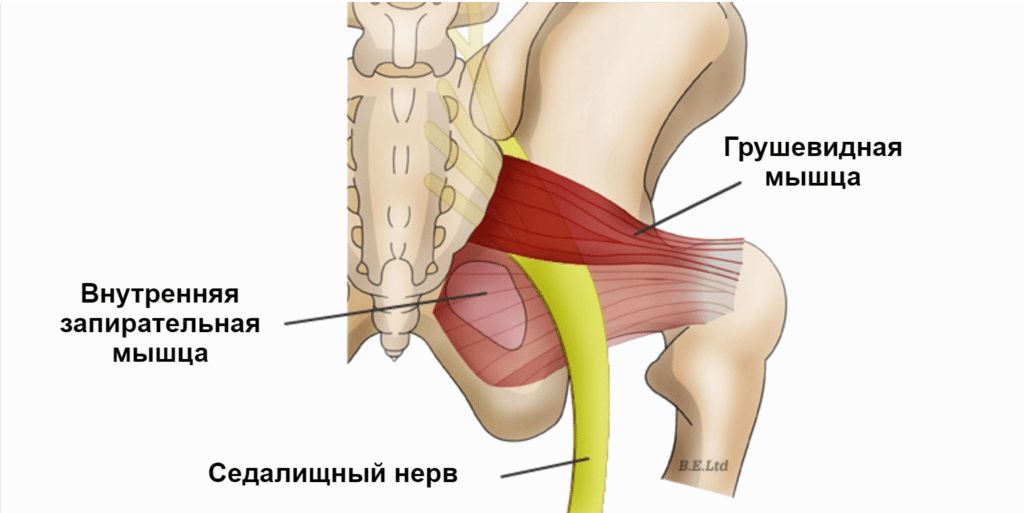
Piriformis syndrome (sciatica neuropathy) develops when a sudden spastic contraction of the pelvic muscle, called the piriformis, occurs. This causes the nerve trunk to become “pinched” between the muscle and the nearby tough cruciate ligament.
Reflex spasm of the piriformis muscle most often occurs with a disease known to all of us – osteochondrosis of the spine, especially its lumbosacral region.
Symptoms of sciatica
The main clinical signs of sciatic nerve damage:
- intense burning pain,
- as well as paresthesias (a sensation of “crawling ants”) in the buttock and thigh area, which spread to the lower leg and foot, mainly in the area of the anterolateral surface of the lower leg and the dorsum of the foot.
This can weaken the reflex from the Achilles tendon. In the future, the sensitivity and strength of the muscles in the lower leg and foot may decrease.
Treatment of sciatic nerve neuropathy
Treatment of piriformis syndrome tactically depends on the underlying disease that causes the clinical signs of this syndrome . In some cases, surgical intervention is required – removal of a herniated intervertebral disc , which triggers the reflex mechanism for the development of the above symptoms.
At the initial stage of treatment, the patient is prescribed conservative therapy, which includes:
- prescribing painkillers,
- blockades with corticosteroid hormones ,
- physiotherapy,
- therapeutic gymnastics,
- massage.
Neurosurgeon Borblyk E.V.